The Frailty Trap: Why "Taking it Easy" is the Most Dangerous Thing You Can Do
"Take it easy" is the worst advice you can get. Learn why functional stress and heavy loading are the only ways to avoid the frailty trap and stay independent.
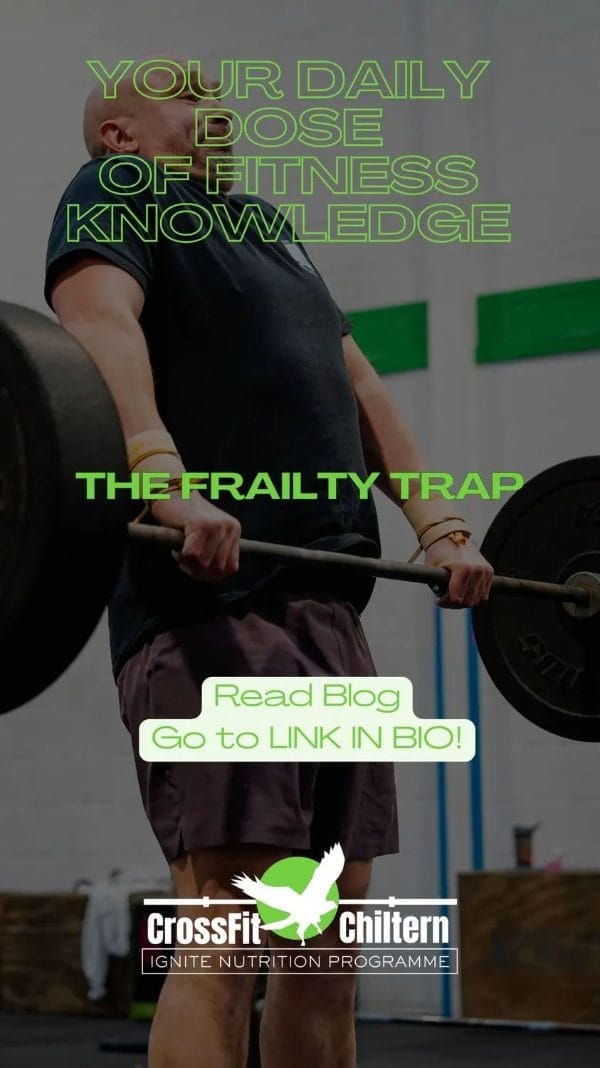
As people hit their fifties and sixties in our community, they often begin to receive well-meaning but ultimately dangerous advice from friends, family, and sometimes even misinformed medical professionals. They are told to "slow down," to "be careful," and—most damagingly—to "take it easy." The narrative is that as we age, we become fragile, and the best way to protect ourselves is to avoid physical stress and stick to low-impact activities like walking or light swimming.
I want to be blunt: "Taking it easy" is the fastest way to fall into the Frailty Trap. Frailty isn't an inevitable part of getting older; it is the physical manifestation of a "down-regulated" biological system. When you stop demanding high-level work from your bones, your muscles, and your central nervous system, your body assumes that these tissues are no longer necessary. It sees them as expensive luxuries and starts to "offload" them to save energy. This is how independence is lost and how the 5-year journey to success turns into a rapid decline.
Preventing frailty as you age CrossFit: The Signal of Functional Stress
Your body is a masterpiece of adaptation, but it only adapts to the signals you send it. To stay strong, dense, and resilient, your biology requires a signal of "functional stress." This is why we prioritise heavy squats, deadlifts, and weighted carries at CrossFit Chiltern. We aren't just "exercising"; we are providing the clinical stimulus required to keep your internal engine from rusting.
When you lift a heavy barbell or carry a pair of kettlebells across the floor, you are sending a loud, clear message to your cells: "I am still an active, capable human who needs a high-performance chassis." Your body responds by maintaining bone mineral density and keeping muscle fibres "online." Conversely, when you avoid load, you initiate a cycle of softness. Your bones become more porous (osteopenia), your muscles begin to waste away (sarcopenia), and your joints lose their stability. By the time you reach seventy or eighty, the very things you did to "save" yourself have left you vulnerable to the falls and fractures that define the frailty trap.
Building the "Functional Buffer"
At CrossFit Chiltern, we train to build a Functional Buffer. Think of this as your "Physical Pension." Just as you wouldn't want to reach retirement with zero savings, you don't want to reach your final decades with zero physical reserve.
The person who can only just stand up from a chair at age sixty is in a state of extreme risk. If they get sick or have a minor injury, they dip below the "dependency line" and lose their independence. However, the person who trains with us—the person who can still squat 50kg at age sixty—has a massive buffer. Even if they face a health challenge, they have so much "extra" capacity that they stay well above that line. We want you to be so strong that the standard tasks of life—carrying shopping, putting a bag into an overhead compartment, or playing with grandchildren—don't even register as "work" for your system.
Ignite Corner: Dr. Amy George on Health Span vs. Life Span
To build this buffer and avoid the trap of fragility, your lifestyle must support your movement. This is where our Ignite Nutrition Programme becomes essential for our older members. Dr. Amy George, our Nutrition and Lifestyle coach heading up our Ignite Programme, often highlights that "Life Span" (how long you live) is meaningless without "Health Span" (how well you live).
Through the Ignite framework, Amy focuses on the "Nutrition" and "Sleep" pillars to ensure your body has the raw materials to respond to the stress of training. Amy often points out that as we age, our "Protein Anchor" becomes even more critical. Older adults actually require more high-quality protein to stimulate muscle repair than younger athletes do. Without sufficient fuel, the barbell can't do its job.
As Amy says, "Strength is the primary predictor of your quality of life in your final decades. If you lose your strength, you lose your world." By aligning your medical-grade lifestyle habits with our movement standards, you are taking ownership of your biological story. You are moving from being a "spectator" of your own decline to being the Director of your longevity.
Hard to Kill: The Identity of Independence
We want our members to be "hard to kill." In the coaching world, this means having the physical and mental resilience to handle whatever life throws your way. It means being the person who can slip on a wet pavement and have the reflexes and bone density to get right back up without a trip to the hospital.
Don't let the world convince you that getting older means getting softer. Take the lead. Embrace the barbell. Trust our professional coaching team to meet you exactly where you are and scale the intensity to your relative level. We will build your chassis before we race the car, ensuring you get the stimulus you need without unnecessary risk.
The 5-year journey doesn't have an expiry date. Whether you are forty, sixty, or eighty, the rules of biology remain the same: Use it or lose it. Let's choose to use it.
Ready to build your functional buffer and avoid the frailty trap? Book a Discovery Call today with one of our team and let's start your 5-year journey to lifelong independence!
Ready to put this into practice? Join a class at CrossFit Chiltern in Amersham — our coaches will guide you every step of the way.