The Protein Anchor: How to Build Every Meal for Performance
Stop overcomplicating your plate. Discover why anchoring your meals with protein is the simplest way to see results in the box.
If you ask ten different "fitness gurus" for nutritional advice, you’ll get ten different answers. Some will say low carb, some will say low fat, some will tell you to only eat in a six-hour window, and others will tell you to go entirely plant-based. It’s no wonder so many people in the Amersham community feel paralyzed by choice. The noise is constant, and much of it is contradictory. Understanding the importance of protein for crossfit can help you make informed choices.
At CrossFit Chiltern, we like to cut through that noise. We don't believe in "fads" or "quick fixes"; we believe in human biology. And the most important biological rule for any athlete—whether you are a 25-year-old chasing a competitive Open score or a 60-year-old training for lifelong independence—is this: Anchor every meal with protein. Protein isn't just another macro; it is the structural and metabolic foundation of your body. If you want to see the results of the work you’re putting in at the box, you need to stop treating protein as an afterthought and start treating it as your non-negotiable anchor. Recognising the importance of protein for crossfit is essential for optimal performance.
The Repair Kit for Your Muscles
When you step into CrossFit Chiltern and tackle a workout, you are essentially creating microscopic "damage" to your muscle fibres. This sounds scary, but it’s actually a good thing! It is the necessary signal your body needs to grow stronger, more resilient, and more capable. However, that growth and repair can only happen if you provide the "repair kit"—amino acids, which are the building blocks of protein.
If you are training hard but failing to hit your protein targets, you are essentially breaking down your body without giving it the materials to rebuild. This is why so many people feel "beat up" or chronically sore after a few weeks of training. They are digging a metabolic hole. By having a "Protein Anchor" (think a palm-sized portion of meat, fish, or eggs) at every single meal, you are ensuring your "Growth Engine" always has the parts it needs to stay in the game. You aren't just "exercising"; you are providing the raw materials for a physical transformation.
The Satiety Secret: Killing the Cravings
Beyond muscle repair, protein is the ultimate tool for weight management and metabolic health because of its effect on your brain and your hormones. Of the three macronutrients—carbohydrates, fats, and protein—protein has the highest satiety index. It is the nutrient that makes you feel "full" the fastest and, more importantly, keeps you satisfied for the longest.
When you anchor your meal with a solid hit of protein, you trigger the release of hormones that tell your brain, "We are fed. You can stop looking for food now." This is the secret to avoiding the 3:00 PM office slump or the late-night raid on the kitchen cupboards. If you find yourself constantly battling cravings for sugar or processed snacks, the problem usually isn't a "lack of willpower." The problem is a lack of protein at your previous meal. When you prioritise protein, the "how much" of your nutrition often takes care of itself because your body’s natural regulation systems are finally being allowed to work.
The Thermic Edge: Burning While You Eat
There is another biological advantage to protein that most people overlook: the Thermic Effect of Food (TEF). Your body actually has to work much harder to digest and process protein than it does for fats or carbohydrates. Roughly 20-30% of the calories in protein are burned off just through the process of digestion and assimilation.
Think of protein as a "high-octane" fuel that requires a lot of energy to burn. By making protein the anchor of your plate, you are slightly increasing your metabolic rate every time you eat. It keeps your engine "idling" higher, which is a massive advantage when we are looking at long-term body composition and health.
Implementation: Building the Plate
I don't want you to overcomplicate this. You don't need a degree in nutrition or a sophisticated tracking app to get this right. I want you to look at your plate at every meal—breakfast, lunch, and dinner—and identify the anchor.
If you can't see a clear, single-ingredient protein source, the meal is incomplete.
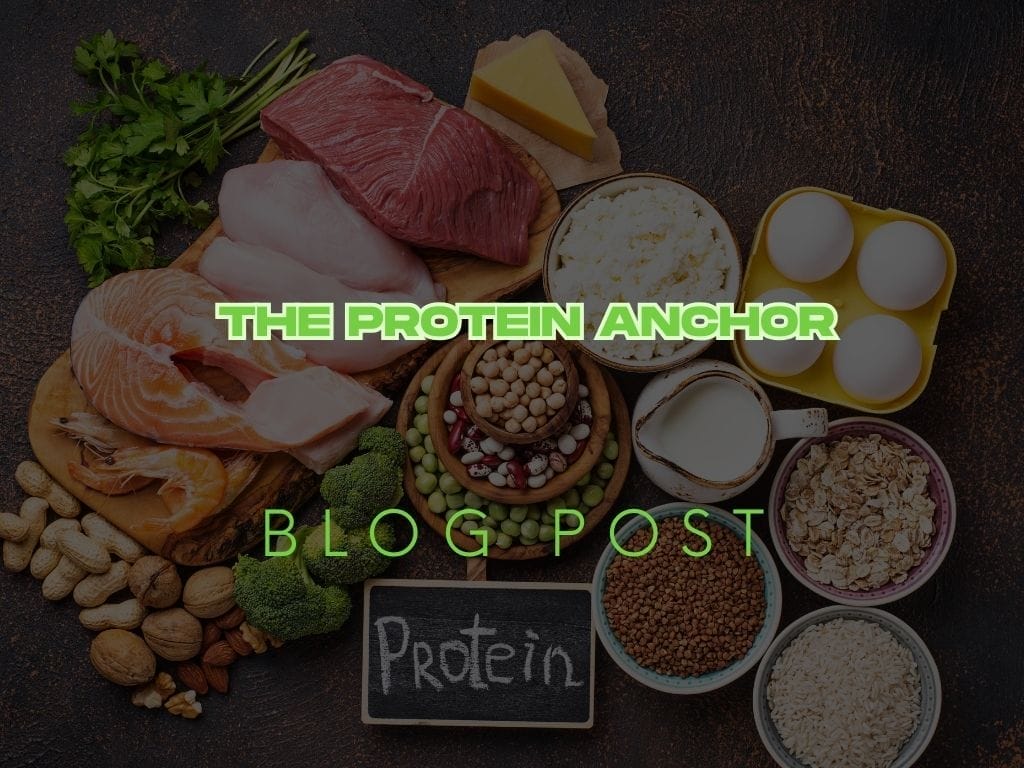
- Breakfast: Eggs, Greek yoghurt, or high-quality smoked salmon.
- Lunch: A chicken breast, a tin of tuna, or a portion of lean beef.
- Dinner: Steak, white fish, or a pork loin.
Once the anchor is in place, you can fill the rest of the plate with the "Whole Food Standard" vegetables and fats that we’ve discussed. But the protein comes first. It is the variable that determines your recovery, your hunger levels, and your hormonal health.
The Long-Term Identity Shift
Making protein your anchor is a vote for the person you want to become. It is the habit of an athlete. It’s about moving away from the "spectator" mindset of eating whatever is convenient and moving into the "director" role of fuelling for a specific purpose.
At CrossFit Chiltern, we are building a legacy of health in Amersham. We want you strong, capable, and independent for the next fifty years. That journey is built on the foundation of the small, daily choices you make at the kitchen table. Anchor your plate, fuel your engine, and watch what happens to your performance in the box.
Ready to simplify your nutrition and finally see the results you've been working for? Our coaching team is here to help you navigate the noise. Our Ignite Nutrition framework, supported by Dr. Amy George’s medical-grade habit coaching, focuses on the "Six Pillars" of health—ensuring your nutrition supports your 5-year journey. Book a Discovery Call today with one of our team! [Link: https://www.google.com/search?q=https://kilo.gymleadmachine.com/widget/booking/sdUjnJkKy9dGRSLzEGzz]