Mastering the Red Line
The fastest way to finish last is to go out too hard. Learn the science of pacing, threshold training, and how to treat your 20-minute AMRAP like a 5k row.
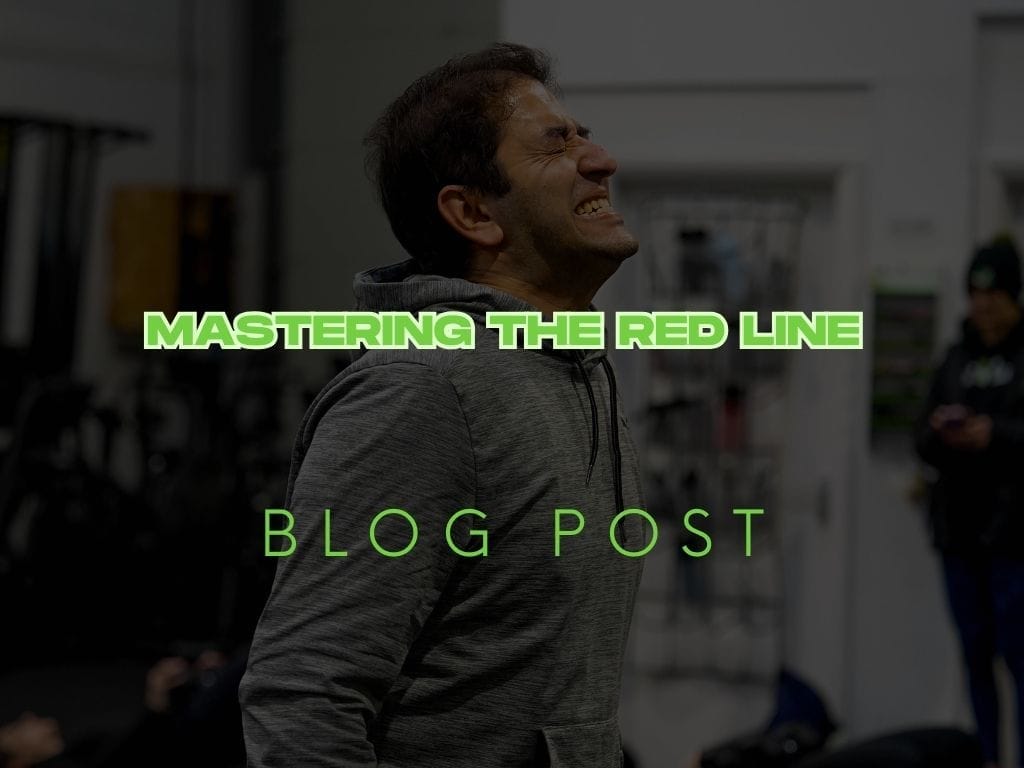
We’ve all seen it happen. The 3-2-1-GO buzzer sounds, and someone sprints out of the gate like they’re running a 100m dash. For about 90 seconds, they look like a world-beater. Then, the "Red Line" hits. Their pace grinds to a halt, their hands go to their knees, and they spend the rest of the workout in a state of physical and mental panic. Understanding a crossfit pacing strategy threshold training is crucial to avoid this.
In the CrossFit world, we talk a lot about intensity. But intensity without intelligence is just a fast way to burn out. To truly progress, you have to understand the Red Line—your anaerobic threshold. This is the point where your body can no longer clear the waste products of exercise as fast as you are producing them. Once you cross that line, your heart rate skyrockets, your muscles feel like they are filled with acid, and your technique disappears. At CrossFit Chiltern, we want you to be an intelligent operator of your own engine.
The Science of Threshold Training
Incorporating a crossfit pacing strategy threshold training into your regimen can help maintain performance without hitting that dreaded Red Line.
The CrossFit Level 1 handbook discusses a vital concept: Threshold Training. This is the practice of working at the very edge of your capacity. If you stay well below your threshold, you aren't providing enough stress to force an adaptation. If you go far beyond it, you "red-line" and your power output collapses.
The "sweet spot" for elite fitness is flirting with that line. We want to push our threshold further and further out so that the pace that feels like a "sprint" today feels like a "jog" next year. But to train the threshold, you first have to respect it. You have to know where your line is and have the discipline to stay just one centimetre behind it until the end of the workout.
Relating the WOD to the Track and the Erg
Most people find it hard to pace a "Mixed Modal" workout (a mix of lifting, gymnastics, and cardio) because the movements are so varied. To simplify this, I want you to start relating our workout durations to standard running or rowing distances. This gives you an immediate mental "map" of how your heart rate should feel.
The 7-Minute AMRAP: The Mile Run or 2km Row If a workout is 7 minutes long, you should think of it like a 1-mile run. A mile is a controlled sprint. You can’t go at 100% in the first 400 metres, or you’ll be walking the last lap. However, you can’t "dawdle" either. You need to find a high, uncomfortable gear and hold it. Your breathing should be heavy but rhythmic from the start, and you only "empty the tank" in the final 60 seconds.
The 10-12 Minute WOD: The 3k Run or Row
This is a classic CrossFit duration. Think of this like a 2k row. Anyone who has done a 2k row knows that the "pain cave" starts at the 1,000m mark. If you start too aggressively, the second half of the row is a disaster. In a 12-minute WOD, your goal is to find your "Red Line" and sit on it. You should be moving constantly, with transitions that take no more than three seconds.
The 20-Minute AMRAP: The 5k Run/Row
This is an endurance test. If you approach a 20-minute workout like a sprint, you will hit the Red Line by minute four and spend sixteen minutes in misery. Think of this as a 5k row. You need a "Forever Pace"—a pace that feels "boring" for the first five minutes. If you don't feel like you’re moving a bit too slow in the first round, you are probably moving too fast. The winner of a 20-minute AMRAP is the person whose last round is faster than their first.
Pacing as a Technical Skill
Just like a snatch or a pull-up, pacing is a skill that must be practiced. It requires you to check your ego at the door. It’s hard to let someone "beat" you in the first round of a 5k-style WOD, but the reward comes in the final minutes when you are the one still moving while they are standing with their hands on their knees.
To master your engine, you need to listen to your "biometric anchors." Pay attention to your breathing. If you can no longer maintain a steady exhale during a movement, or if you find yourself gasping for air between reps, you’ve likely crossed the line. This internal awareness is what separates a beginner from a veteran.
Why We Pace in Every Class
At CrossFit Chiltern, we don't just pace for the Open; we pace to ensure every session delivers the intended metabolic result. If a workout is meant to be a long, aerobic "grind" and you turn it into a short, anaerobic "sprint" followed by ten minutes of resting, you’ve missed the stimulus. You’ve done a different workout than the one I programmed.
By respecting the distances and the durations, you ensure that your "Growth Engine" is being built across all energy systems. We want you to have the explosive power of a sprinter and the relentless engine of a marathoner. That only happens when you learn to respect the Red Line.
Ready to learn how to manage your engine and get better results? Book a Discovery Call today with one of our team! [Link: https://www.google.com/search?q=https://kilo.gymleadmachine.com/widget/booking/sdUjnJkKy9dGRSLzEGzz]