Mastering the Kip Swing Part 4: Finding Your Open Rhythm
Timing is everything. Learn the snappy "Beat Swing" as we show you how to create weightlessness and move through gymnastics workouts with ease.
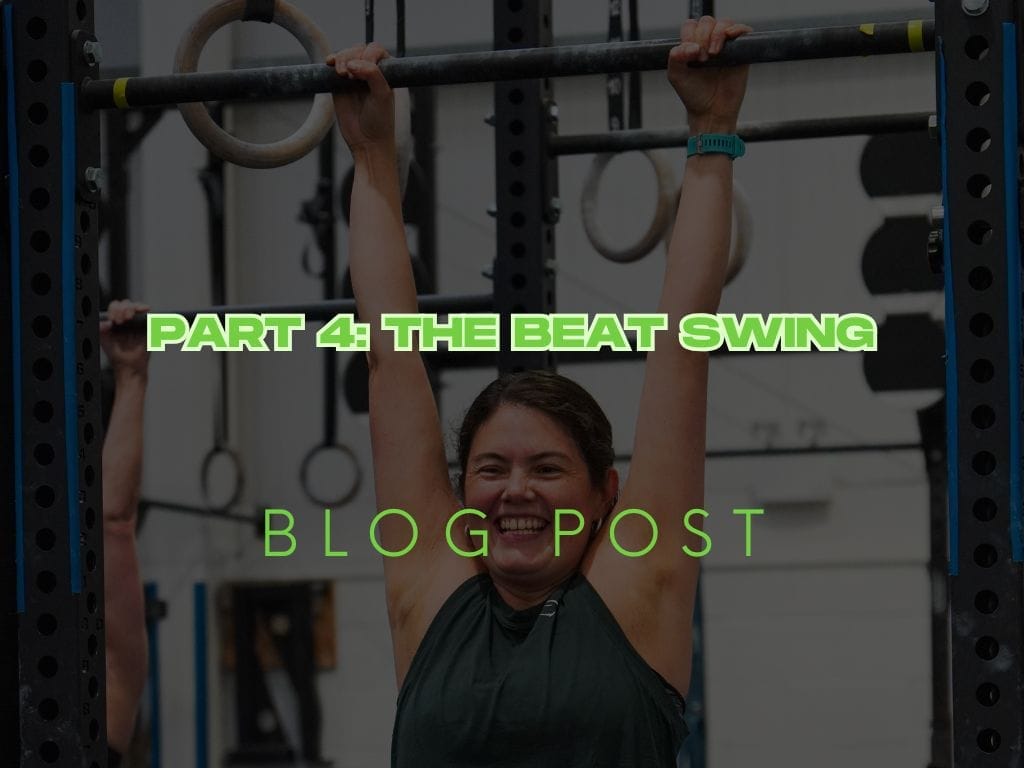
The "Beat Swing" is the small, snappy version of the kip. It is the movement you will use for high-volume Toes-to-Bar or Pull-ups when the clock is ticking in the Open. While the previous parts of this series focused on building the strict strength and the shapes, Part 4 is all about Timing and Rhythm, especially the crucial aspect of beat swing timing crossfit.
In the heat of competition, efficiency is the difference between a "good" score and a "great" one. But remember our mantra: we only add this speed once the foundation is unbreakable.
By mastering beat swing timing crossfit, you can maximise your efficiency in every workout.
Understanding beat swing timing crossfit can elevate your performance significantly, helping you achieve better results in your workouts.
Creating Weightlessness
When you time the transition correctly, you create a fleeting moment of "weightlessness" at the top of each swing. Think of it like a child on a swing set—there is a specific moment at the peak of the arc where you are neither going up nor down. In CrossFit gymnastics, this is your "window of opportunity." This is when you perform the "pull" for a pull-up or the "flick" for a toe-to-bar.
If your timing is off, you’ll find yourself "double-kipping" or swinging wildly out of control. This wastes massive amounts of energy and puts an unnecessary, exhausting strain on your grip. At CrossFit Chiltern, our team teaches you to listen for the "beat." It should be a crisp, clean snap between shapes. It’s not a slow, languid swing; it’s a sharp, intentional pulse that originates from the shoulders and the midline.
The Neurology of the Kip
Timing isn't just a physical skill; it's a neurological one. It’s your brain communicating with your muscles to fire at the exact millisecond required. I’ve noticed over the years that when our members are under-slept or over-stressed from a long week in the office, their coordination is the first thing to go. This is why you might feel like you’ve "lost your kip" on a Friday evening.
Your nervous system needs to be primed to perform. If you are using the kip to mask a lack of strict strength, your nervous system will be under too much "threat" to find this rhythm. You'll be in "survival mode" rather than "performance mode." This is why our Ignite Nutrition Programme emphasizes the "Sleep" and "Stress" pillars. To find the "beat," you need a calm, recovered mind.
The Drill: The Snappy Beat
Start with the strict transitions from Part 3, but we want you to begin increasing the speed.
- As you move into the Arch, "push" the bar away from you with straight arms.
- As you move into the Hollow, "pull" down on the bar as if you’re trying to bring it to your hips.
The movement should be generated entirely from your shoulders and your core, not your legs. Your body should feel like a high-tension spring being compressed and released. When you can do 15 of these in a row without losing the "beat," you are finally ready for the final piece of the puzzle: the start.
Ready to crush your Open goals? Book a Discovery Call today! https://kilo.gymleadmachine.com/widget/booking/sdUjnJkKy9dGRSLzEGzz